

Parents and caregivers focused on safety often carry a heavy tension: raising confident kids while staying alert to anxiety, boundary violations, and the need to leave unsafe situations. In early childhood development, leadership skills in children don’t look like being “in charge”, they look like speaking up, making small choices, and trusting their own signals. The challenge is that many families worry that empowerment will create conflict or disrespect, especially when everyone is already emotionally stretched. With steady, age-appropriate parenting strategies for leadership and simple child empowerment techniques, everyday moments can help children practice voice, boundaries, and responsibility.
Leadership doesn’t have to be a “lesson” you add to your day. The safest, most natural leadership opportunities at home come from giving kids small, real ways to contribute, while you stay close, supportive, and in charge of the big stuff.
1. Offer two safe choices (and stick to them): Pick moments that don’t affect health or safety, snack options, pajamas, which book, whether to water plants before or after dinner. Two choices is enough to build decision-making without overwhelming young kids. If they struggle, you can narrate the options (“Both are fine, think about what helps your body feel calm”) and let them try again tomorrow.
2. Give one “owned” family job with a clear finish line: Choose a responsibility that’s small, predictable, and visible, putting napkins on the table, matching socks, feeding a pet with supervision, or putting dirty clothes in the hamper. A helpful leadership tip is to provide success criteria so your child knows what “done” looks like (for example: “One napkin at every spot, then tell me you’re finished”). Clear expectations reduce power struggles and keep the task emotionally safe.
3. Use teamwork language during everyday tasks: When you cook, tidy, or get out the door, describe the family as a team: “I’ll pack the bag, you choose the toy, and we’ll meet by the door.” This builds cooperation skills without forcing a child to “perform” leadership. It also supports safety-focused parenting because kids learn how to ask for help and how to work with trusted adults.
4. Practice “plan–do–review” in two minutes: Before an activity, ask, “What’s the plan?” During it, let them try. Afterward, ask, “What worked? What should we change next time?” This simple routine teaches reflection and problem-solving, core leadership traits, and helps anxious kids feel more prepared because they know there’s a calm check-in at the end.
5. Praise the process, not just the result: When your child makes a thoughtful choice, name what you noticed: “You thought about the rule and then decided,” or “You asked for help before it got too hard.” Children’s Hospital of Philadelphia notes the value of praise for decisions, which encourages kids to keep practicing judgment, an important protective skill as they grow.
6. Create a “trusted grown-up” script during leadership moments: When kids lead (choosing the game, being “line leader,” taking an order at a café), quietly reinforce boundaries: “If you feel unsure, you come to me,” and “Grown-ups don’t ask kids to keep secrets from parents.” Leadership grows best when children feel secure, know their body signals matter, and understand that you’re their safe backup.
When these small moments repeat, kids start to see themselves as capable contributors, and you’ll have a few go-to routines you can use week after week, even on busy days.
Try these small rituals to keep it simple.
Repeated, predictable habits help young children practice leadership in ways that also support well-being and abuse prevention. When you build routines around voice, boundaries, and repair, kids gain confidence while you stay the steady, protective adult.
Daily Check-In Question
● What it is: Ask one question at bedtime: “What felt easy, hard, and helpful today?”
● How often: Daily
● Why it helps: It normalizes sharing, making it easier to report worries early.
Two-Step Problem-Solving Practice
● What it is: Name the problem, then choose one next step together.
● How often: Daily
● Why it helps: It strengthens executive functions like planning and learning from mistakes.
Weekly “I Noticed” Notes
● What it is: Say one specific leadership observation: “I noticed you asked for help.”
● How often: Daily
● Why it helps: It reinforces safe communication over people-pleasing.
Rotating Helper Role
● What it is: Let your child take on tasks that they “own” with a clear start and finish.
● How often: Daily
● Why it helps: It builds accountability without pressure or shame..
Body-Signal Pause
● What it is: Pause and label body clues, then pick a calming action.
● How often: Daily
● Why it helps: : It teaches kids to trust discomfort and seek support.
Choose one habit to start this week, then adjust it to fit your family.
With those rituals in place, choose a focus. This table compares leadership traits you can build in young children and the simplest parental moves that support safety, voice, and steady connection.
Daily choices caregivers make matter because small, repeated interactions shape how kids ask for help, handle conflict, and name uncomfortable feelings.
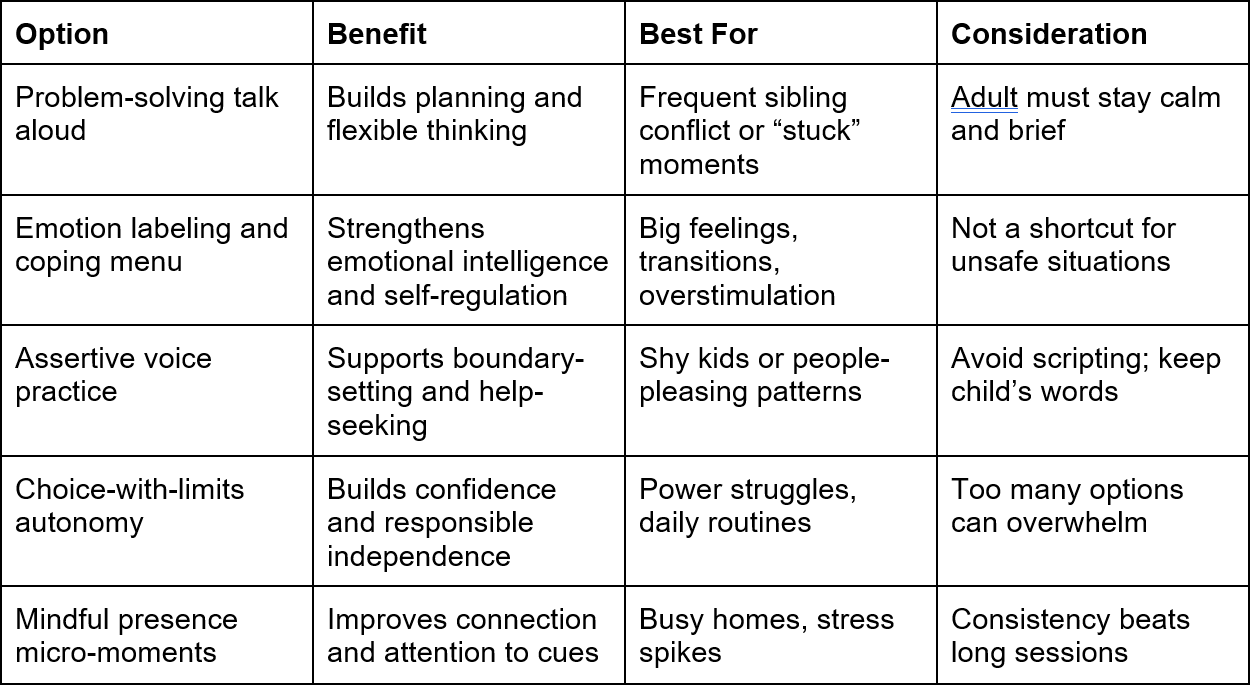
If your goal is safer communication, prioritize assertive voice and emotion labeling. If your goal is smoother cooperation, start with choice-with-limits and problem-solving talk aloud. Picking one primary trait makes this week feel doable and clear.
When parenting feels uncertain, simple answers can make the next step clearer.
Q: What are some early signs that my child has leadership potential?
A: Look for initiative, empathy, and a willingness to include others, not bossiness or being “the loudest.” A child who suggests games, notices when someone is left out, or asks thoughtful “why” questions is practicing influence in healthy ways. With so many children under age six, it helps to remember leadership can look quiet and still be powerful.
Q: How can I help my child build confidence to take on leadership roles?
A: Start with small, safe leadership moments, like choosing between two options or helping set the table. Praise effort and problem-solving, and practice a simple help-seeking script: “I need help” or “Please stop.” Confidence grows fastest when kids feel protected, heard, and taken seriously.
Q: What strategies can I use to teach my child to handle stress and responsibility effectively?
A:Teach “pause and name it” before fixing anything: “My body feels tight, I’m frustrated.” Offer two coping tools they can choose from, like breathing with you or getting a drink of water, then return to the task in one tiny step. This reduces overwhelm and supports safer choices.
Q: How can I simplify busy family schedules to create opportunities for my child to develop leadership skills?
A:Pick one daily routine to slow down, such as bedtime or the morning exit, and hand your child one predictable job. Keep it consistent for two weeks, then add one more responsibility only if stress stays low. Less variety, more repetition, often creates the calm where leadership can show up.
Q: If my child feels stuck or uncertain about their future, how can pursuing advanced studies and certifications help open new pathways for them?
A:For older kids and teens, exploring structured learning goals can turn “I don’t know” into a plan with milestones, mentors, and real-world skills. Start by assessing what you want most right now: emotional support, academic direction, or a clearer career map. Those interested in online IT master’s degree programs may also find it helpful to map options alongside these goals. Reliable snapshots like child well-being data can also help you advocate for the supports your child needs.
Small, steady practice builds leadership and safety, even when the day feels messy.
It’s easy to wonder if encouraging leadership will create pressure, conflict, or “bossy” behavior, especially when safety and respect matter so much at home. The steadier path is the one outlined here: focus on guidance, boundaries, and everyday opportunities that let children practice responsibility in age-appropriate ways. When applying leadership tips consistently, small wins stack up, parental confidence in guidance grows, and leadership skill reinforcement becomes part of normal family life. Consistency, not intensity, is what helps leadership take root in young children. Choose one strategy today and use it the same way for the next two weeks. Over time, these simple patterns support long-term child development by building resilience, trust, and healthy independence.
Four Tips on Leaving a Bad Situation article